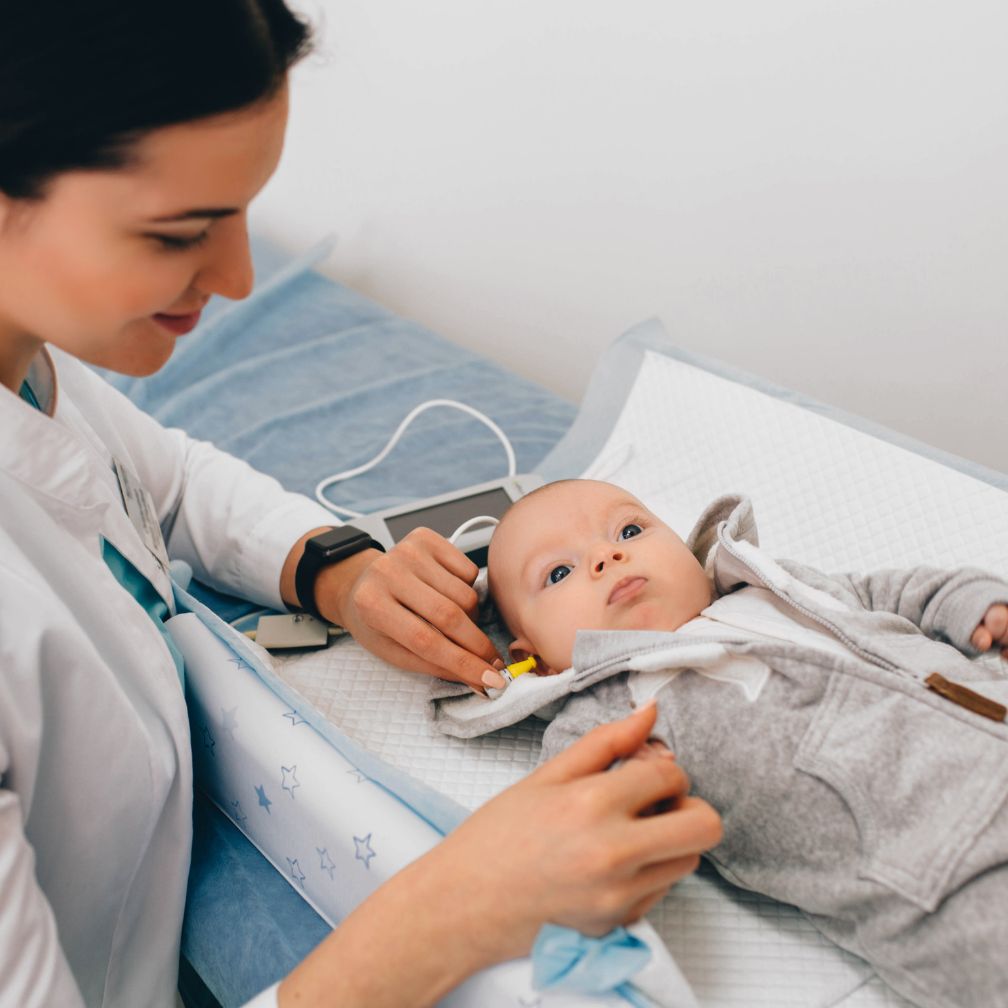
For mothers and fathers with newborns, realizing their child experiences hearing impairment often feels deeply disheartening and sad. However, the encouraging reality remains: through prompt screening and early care, infants with auditory challenges will achieve remarkable achievements. Remarkably, these children can construct early speech, interactive expression, and deep bonds across their environment, fostering an enriched future!
Utilizing wearable hearing aids and state-of-the-art cochlear implants yields two reliable clinical methods for helping babies with hearing impairment. In the upcoming sections, we cover their underlying operational methods to assist you in deciding which technology best serves your youngster.
Understanding Infant Hearing Loss
Hearing impairment across young infants can be driven by diverse potential origins, including:
- Targeted genetic mutations (even within bloodlines having zero background of impairment)
- Early prenatal viral exposures including cytomegalovirus (CMV) or rubella
- Unexpected labor complications, including perinatal hypoxia or preterm birth
- Particular pharmaceutical treatments deployed inside hospital neonatal units
Which step demands immediate priority? Rapid clinical identification. This necessity explains why babies throughout the United States receive hearing evaluations before going home with family. Expert pediatric auditory doctors rigorously follow the standard “1-3-6” diagnostic framework:
- First-stage screening executed prior to 1 month
- Full clinical diagnosis established within 90 days of birth
- Early care (incorporating amplification systems or active therapy) established within 6 months
Reaching these clinical benchmarks offers babies an ideal foundation for strong speech, linguistic, and brain development. If you wish for additional counsel concerning these newborn screens, your pediatrician remains eager to support you!
Deploying Hearing Aids for Newborns
For young children demonstrating mild to severe hearing challenges, pediatric hearing aids typically serve as the frontline remedy. These miniature, wearable instruments elevate acoustic volume, enabling infants to perceive speech and ambient sounds with greater clarity.
Certified pediatric-grade hearing devices stand as:
- Thoroughly safe for use with young infants only several weeks old
- Constructed using pliable, soft ergonomic molds that adjust during early physical growth
- Equipped with child-resistant battery compartments and specialized pediatric safety components
- Uniquely tuned by a licensed pediatric audiologist to match your baby’s exact hearing needs
Throughout early infant development, wearable hearing devices demand ongoing updates to ensure snug placement and precise amplification.
Understanding Cochlear Implantation for Babies
When a child presents with severe to profound sensorineural impairment without sufficient improvement from hearing aids, care teams frequently advise a cochlear implant. Diverging significantly from traditional hearing devices, cochlear implant systems:
- Demand a dedicated surgical procedure for placement executed by a pediatric specialist
- Directly bypass compromised areas within the cochlear system
- Transform acoustic energy into digital electrical impulses that excite the auditory nerve fibers directly
Contemporary cochlear implants operate as:
- Fully FDA-approved for infants beginning around 9 to 12 months
- Most beneficial when reinforced by specialized rehabilitation and strong family involvement
- Advised exclusively after thorough diagnostic testing by a pediatric audiology clinician and an ENT physician
This diagnostic phase features diagnostic imaging, objective hearing assessments, and in-depth discussions surrounding achievable long-term goals.
Evaluating Hearing Aids Against Cochlear Implants
- Mild to severe hearing loss relies on Hearing Aids; Severe to profound hearing loss: Cochlear Implants
- Non-Invasive external fitting: Hearing Aids; Surgical insertion required: Cochlear Implants
- Physical sound amplification: Hearing Aids; Electrical signal stream conversion: Cochlear Implants
- Starts at Infancy: Hearing Aids; Procedure starts at 9-12 months: Cochlear Implants
Hearing Aids vs. Cochlear Implants: Final Thoughts
If your newborn faces a confirmed hearing impairment diagnosis, you can rely on excellent technological options and plenty of support. By partnering with skilled pediatric auditory specialists, numerous children grow to master language development completely comparable to their healthy peers.
Whether your baby benefits most from custom hearing aids or a cochlear implant system, early intervention unlocks lifelong developmental success.
Are you seeking answers about your child’s overall hearing wellness? Reach out to us today to schedule a thorough assessment and individualized management strategy.