
Many people delay getting hearing aids because they don’t think they’ll like how they look or feel. And that’s completely understandable! Furthermore, many individuals harbored deep anxieties about social isolation, fearing others would exclude them from discussions based on assumptions of cognitive decline or profound auditory deficits.
This obsolete perception remains deeply embedded in the public consciousness, creating a massive barrier to proactive treatment. But the reality is that today’s modern hearing aids look and feel very different from what you might expect. Revolutionary breakthroughs in micro-component miniaturization and ergonomic design have rendered these devices incredibly compact, ultra-lightweight, and virtually unnoticeable.
If cosmetic anxiety has caused you to delay treating your hearing loss, it is highly recommended that you evaluate the sophisticated options now available.
Dispelling the Myth: Modern Devices Have Transcended Older Styles
When most individuals conjure an image of assistive listening technology, they envision a massive beige plastic chassis hooked over the pinna and obvious to everyone nearby. If that’s the case, you’re thinking about hearing aids circa the 1980s and ’90s.
Since then, the entire category has evolved. Unprecedented breakthroughs in microchip architecture, material sciences, and digital signal processing have utterly revolutionized modern aesthetics. The resulting devices are beautifully downsized, highly aerodynamic, and built to match lifestyle needs by remaining completely hidden.
Many of today’s devices sit fully inside the ear canal, making them virtually invisible during everyday conversation. Alternatively, post-auricular models are constructed with such streamlined dimensions that they disappear against the scalp, customizable to complement individual skin and hair coloration.
Navigating Modern Hearing Technology: The Three Core Styles Evaluated
If you are curious about the structural choices available for your rehabilitation, here is an accessible overview of current styles:
Invisible-in-Canal (IIC) Technology
This specific configuration offers the highest degree of user discretion. IIC devices sit completely inside the ear canal and are custom-made to fit your ear. Spoken interactions at arm’s length occur without anyone realizing a medical device is present. They remain an exceptionally sought-after solution for patients with mild-to-moderate deficits who refuse to compromise on cosmetic privacy.
The Versatile Receiver-in-Canal (RIC) / Receiver-in-the-Ear (RITE) Style
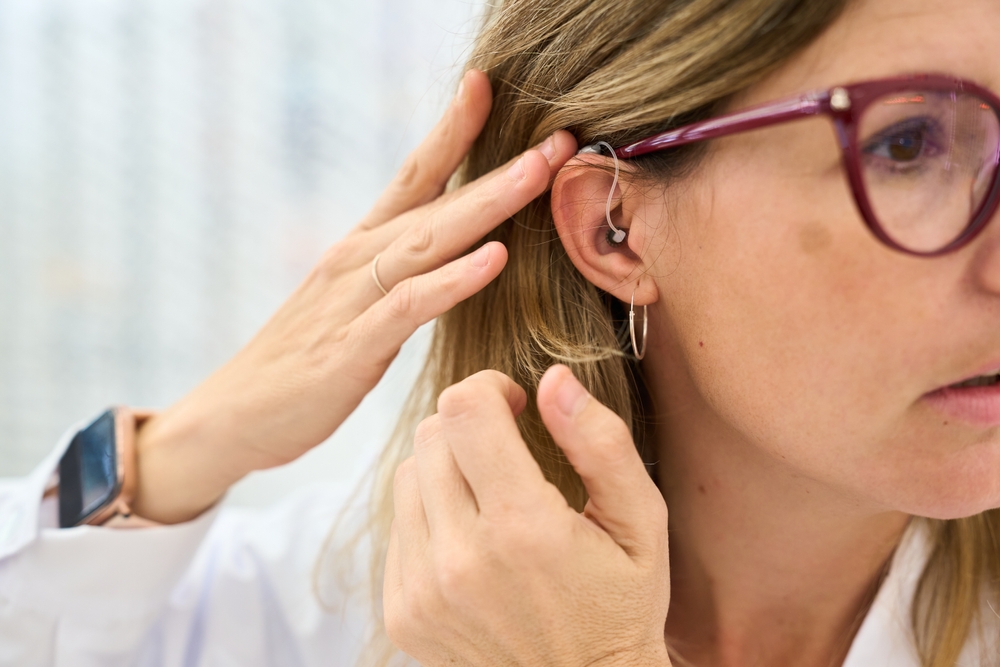
This particular layout has become the benchmark standard for contemporary hearing health restoration. A microscopic electronic hub is positioned behind the outer ear, anchored by an ultra-thin, transparent lead to a high-fidelity speaker seated inside the canal. From an aesthetic standpoint, they look very similar to trendy consumer tech or modern bluetooth monitors. The vast majority of peers will fail to perceive the apparatus unless conducting a highly deliberate close-up inspection.
Traditional Behind-the-Ear (BTE) Reimagined
This style positions the main component body post-auricularly, offering a slightly larger footprint that remains beautifully sculpted and sleek. Frequently utilized to remediate severe-to-profound auditory loss, they maximize gain and processing capability while maintaining a highly professional, low-profile aesthetic.
The key takeaway: Today’s discreet hearing aids are designed to fit your life, not announce themselves.
How Current Hearing Technology Outperforms Traditional Amplifiers
It is vital to recognize that this technological revolution is not simply a visual upgrade. Today, they function more like smart devices than traditional medical equipment. A vast majority feature native Bluetooth connectivity, enabling seamless, wireless streaming of telephonic communication, media, and television audio directly into your auditory pathway.
Through proprietary mobile apps, patients can effortlessly adjust acoustic thresholds or modify directional settings completely hands-free. If you enter a chaotic, crowded room, you can optimize your digital noise reduction settings to isolate speech within seconds. Rechargeable batteries have also replaced the tiny ones people used to struggle with. The process is as simple as placing the units into their charging dock each night, identical to charging your cell phone.
Dismantling the Emotional Stigma of Auditory Assistance
Even knowing all of this, it’s easy to hesitate. Exploring hearing aid options can be challenging on a mental and emotional level because it’s an admission that our hearing isn’t what it used to be. This mental hurdle can make an individual feel exposed, creating a false impression of losing authority over personal wellness.
Let’s reframe this narrative completely: acquiring a modern acoustic instrument is not an admission of weakness. They are merely an intelligent adaptation to a universal milestone of aging that impacts us all eventually. Investing in your hearing shows that you are actively deploying advanced resources to support your systemic well-being and social connection.
Imagine wearing a discreet, barely (if at all) visible device and finally being able to follow along in conversation, hear better in crowds, and focus on the things that really interest you. That is a magnificent example of reclaiming control over your life!
Schedule Your Personal Demonstration of Today’s Top Styles
To dismantle old assumptions, the best strategy is to witness these design breakthroughs with your own eyes. We invite you to come in, ask questions, and explore your options with no pressure and no commitment necessary. View this consultation simply as a tactile opportunity to discover just how radically changed this technology has truly become.
Most people leave surprised by how small, comfortable, and natural modern hearing aids have become! Do not let outdated myths delay your wellness—call our specialized practice or book your appointment online today.